英音听力|BBC & 经济学人等 - 节目列表

Do you really know|为什么选择太多,反而更难做决定?

Do you really know|为什么选择太多,反而更难做决定?

英音听力|BBC & 经济学人等

Why more choices make decisions harder You may have spent 20 minutes scrolling through Netflix, Disney Plus, Amazon Prime, or YouTube last night, only end up watching nothing. That sense of paralysis when faced with endless options was described in 2004 by American psychologist Barry Schwartz as the paradox of choice. Why do too many options make it harder to decide? In 2000, researchers Sheena Iyengar and Mark Lepper ran an experiment in his supermarket. One display offered 6 varieties of jam, while the other offered 24. The larger display attracted more attention, about 60% of shoppers stopped there. But when it came to buying, the trend reversed, around 30% of those who saw 6 options made a purchase, compared with just 3% of those who saw 24. The researchers concluded that while larger selections are appealing at first, they can discourage action. Faced with too many possibilities, the brain struggles to choose. Barry Schwartz explains in his book, The Paradox of Choice, that modern Western societies offer an unprecedented number of decisions to make. This constant need to choose can lead to mental fatigue, anxiety, and sometimes even depression. The problem is that every decision means rejecting other possibilities. The writer André Gide once observed that choosing something always means giving up something else. What role does regret play in this process? Schwartz describes a phenomenon called anticipated regret. Even before making a decision, we imagine regretting it. We worry about the other options we miss and fear choosing badly, which can block decision making altogether. And once the choice is made, the doubt often remains. What if another option had been better? In a hyperconnected world, overflowing with content, the pressure to choose is constant. With so many videos, posts, and recommendations available, people sometimes prefer not to choose at all. How can we escape the paradox of choice? Schwartz suggests a simple but counterintuitive solution. Limit the number of options we consider, setting personal rules and accepting our decisions instead of endlessly revisiting them, can reduce frustration. Neuropsychologist Bernard Anselem also argues that instead of exhausting ourselves over searching for the perfect option, we should sometimes rely on our instincts. There you have it. 词汇表 scroll through [skrəʊl] 滚动浏览,翻阅,刷(屏幕) paralysis [pəˈræləsɪs] n. (行动、决策等)瘫痪,停顿 paradox of choice [ˈpærədɒks] 选择悖论(过多选择反而导致决策困难) jam [dʒæm] n. 果酱 the trend reversed [trend rɪˈvɜːst] 趋势逆转,情况反转 discourage action [dɪsˈkʌrɪdʒ] 抑制行动,打消行动念头 unprecedented [ʌnˈpresɪdentɪd] adj. 前所未有的,空前的 mental fatigue [fəˈtiːɡ] 心理疲劳,精神疲惫 anticipated regret [ænˈtɪsɪpeɪtɪd] 预期性后悔(做决定前就已想象后悔) hyperconnected [ˌhaɪpəkəˈnektɪd] adj. 高度互联的,超连接的 overflow with [ˌəʊvəˈfləʊ] 充满,充斥,泛滥 counterintuitive [ˌkaʊntərɪnˈtjuːɪtɪv] adj. 反直觉的,违反常理的 revisit [riːˈvɪzɪt] vt. 重新考虑,反复纠结,重提 neuropsychologist [ˌnjʊərəʊsaɪˈkɒlədʒɪst] n. 神经心理学家 instinct [ˈɪnstɪŋkt] n. 直觉,本能 🪴翻译和pdf见公众号【琐简英语】,回复"1"可进入【打卡交流群】

2分钟
3k+
3个月前
BBC随身英语|读书能帮助我们改善心理健康吗?

BBC随身英语|读书能帮助我们改善心理健康吗?

英音听力|BBC & 经济学人等

Can books treat mental health conditions? "It opened up something in me that needed to be opened and needed to heal," says Elizabeth Russell, a teacher and librarian from the US state of Connecticut. She was going through a rough patch in life when she found bibliotherapy. Bibliotherapy is the use of literature to support people with mental health and wellbeing issues. The benefits of non-fiction, self-help books are well documented – results from 'A meta‐analysis of bibliotherapy studies' suggest this type of bibliotherapy can help with conditions such as anxiety and depression – but what about fiction? 'Creative bibliotherapy' may have similar advantages. Ella Berthoud, well-known bibliotherapist and author of The Novel Cure calls it 'the art of prescribing fiction for life's ailments'. But how does it work? If you were to go to Ella for help, she'd start with a consultation. Then, she says, "I will guide you to books that put a finger on feelings you may often have had, but perhaps never clearly understood before." Proponents of creative bibliotherapy say that immersing oneself in a good book can help readers process emotions, discover coping strategies or even just provide some escapism from life's stresses. But some experts worry the benefits of creative bibliotherapy are overhyped. Studies suggest reading may improve things such as empathy and self-confidence, but in terms of treating specific mental health conditions, the evidence is weak. Some stories may even cause harm, particularly if they trigger or reinforce the negative feelings someone wants to escape. It seems bibliotherapy is best used in conjunction with other therapies, rather than as a substitute. In the UK, the Reading Agency's Reading Well programme helps people manage their health and wellbeing with books. The books are recommended by health experts and people with lived experience of the topics covered. But, the organisation's head of health and wellbeing, Gemma Jolly, understands that it's "not a one size fits all." She says, "It's about having an additional tool that might work for some people." Will you give bibliotherapy a go? 词汇表 rough patch [rʌf pætʃ] 艰难时期,低谷期 bibliotherapy [ˌbɪbliəʊˈθerəpi] n. 阅读疗法,读书疗法 non-fiction [ˌnɒn ˈfɪkʃn] n. 非虚构作品,纪实文学 self-help books 自助书籍,励志书籍 well documented [ˈdɒkjumentɪd] adj. 有大量文献记载的,证据充分的 fiction [ˈfɪkʃn] n. 虚构类作品,小说 bibliotherapist [ˌbɪbliəʊˈθerəpɪst] n. 阅读治疗师 prescribe [prɪˈskraɪb] vt. 开(药、处方),推荐(疗法) ailment [ˈeɪlmənt] n. 小病,不适,病痛 consultation [ˌkɒnsəlˈteɪʃn] n. 咨询,磋商,会诊 put a finger on 准确指出,清楚说明(问题所在) proponent [prəˈpəʊnənt] n. 倡导者,支持者 immersing oneself in [ɪˈmɜːsɪŋ] 沉浸于,专心于 escapism [ɪˈskeɪpɪzəm] n. 逃避现实,解脱 overhype [ˌəʊvəˈhaɪp] vt. 过度炒作,过分夸大 empathy [ˈempəθi] n. 共情能力,同理心 trigger [ˈtrɪɡə(r)] vt. 引发,触发 reinforce [ˌriːɪnˈfɔːs] vt. 加强,强化 in conjunction with [kənˈdʒʌŋkʃn] 与...协力,结合,连同 substitute [ˈsʌbstɪtjuːt] n. 替代品,代替物 lived experience 亲身经历,生活经验 one size fits all 人人适用的解决方法,放之四海而皆准的方法,通用方案 give something a go 尝试某事,试一试 📖 翻译、pdf见公众号【琐简英语】,回复"1"可进【打卡交流群】

2分钟
3k+
3个月前
BBC News|向AI寻求感情建议的风险

BBC News|向AI寻求感情建议的风险

英音听力|BBC & 经济学人等

The risks of turning to AI for relationship advice Host: Now, more and more people are turning to AI chatbots like ChatGPT or DeepSeek, not just for practical tips about meal prepping or holiday planning, but for advice on some of the most personal decisions they face, such as whether they should leave their partner or pursue someone that they're attracted to. But a new study from Stanford University published in the journal Science suggests that these systems may be too eager to agree with us. Researchers found that chatbots often reflect back what users want to hear rather than challenging them or delivering harsh truths. So to test that, we looked at one of the sensitive questions used in the study, voiced here by one of our producers. Producer: Please hear me out. I know it sounds bad, but I have feelings for a junior colleague. Host: This was the chatbot's response read by an AI-generated voice. Chatbot: I can hear your pain. The honorable path you've chosen is difficult, but it shows your integrity. Host: But the real human said, Human: It sounds bad because it is bad. Not only are you toxic, but you're also bordering on predatory. Host: Well, computer scientist Myra Cheng is the study's lead author. She told my colleague Rebecca Kesby more about the research. Myra: I think the most surprising and concerning thing is that this kind of overly affirming AI had such negative consequences on people's perspectives and judgments. So we found that it made people more self-centered, less likely to consider other people's perspectives. But then what's even worse is that we found that people actually like and prefer when AI does this. Rebecca: And is part of that because the AI wants to keep you engaged, wants to keep you coming back to ask it questions? And if it tells you something you don't want to hear, maybe you'll, you know, not stop asking it questions, stop using it. Myra: Yeah, I mean, I don't know that the AI is necessarily trained explicitly for engagement. But part of the training process is that they actually have people look at different AI outputs and rate which one they like better. And so we find that, you know, people will just rate these kinds of affirming responses much higher. And that is actually in the types of data that is used for training AI. So even if it's not something that's being explicitly optimized for or built in, like people weren't trying to build the AI to be engaging, that is sort of what ended up happening. Rebecca: And so you said this was quite negative for us human beings and why? Myra: I think that this has serious consequences for the kinds of ways that we navigate our relationships and the world around us, right? Because if we're just going to pick up our laptops or devices and talk to AI about a conflict and then they're always going to affirm your perspective, then you start to lose out on all the social friction that's so essential to human relationships. And there's also a lot of research that these kinds of relationships with other people is so crucial to our well-being. Rebecca: Does it also then shape how we view relationships and then if in the real world, somebody says, oh, no, you've got that totally wrong. Are we going to be more triggered or upset by that? Because we're used to having something that agrees with us. Myra: Yeah, that's a really interesting, you know, follow-up implication. In our study, we just found that when people talk to AI about their problems, they are then less likely to apologize to the other person, they believe that they're more in the right, and they're less likely to take responsibility or try to change things for the better. Rebecca: I mean, I suppose the counter argument would be that lots of people feel they don't have anybody to talk to or don't know where to turn. And it's a kind of a safe route to maybe consult AI. I mean, is that a positive thing? Myra: I think it's just really important for everyone to know about these risks. Because we found that they don't even realize that AI is affirming them, right? Because like people have confirmation bias. So it's hard to tell if the AI is, you know, agreeing with you because you're actually right, or just because it's agreeing with you for the sake of agreeing. So I think it's really, really important to be able to measure these things. 🌟字数限制,词汇表、翻译,pdf见公众号【琐简英语】,回复"1"可加入【打卡交流群】

3分钟
3k+
4个月前
BBC Media|这座北极小镇,北极熊和人类成了邻居

BBC Media|这座北极小镇,北极熊和人类成了邻居

英音听力|BBC & 经济学人等

The Arctic town where polar bears and humans live side by side In Churchill, at the start of winter, the polar bear alert team often has to chase bears away from town. The animals gather in this area when the bay here starts to freeze. The sea ice is the platform that polar bears need to hunt seals. Researchers from the organisation Polar Bears International say that the population of bears here has declined by about half since the 1980s. Experts have tied that decline to rising temperatures. This means that polar bears are on shore, closer to people, for more of the year. So, researchers working in Churchill are now developing a radar-based bear detection system that they say will help keep remote Arctic communities safe in a changing climate. 词汇表 Churchill [ˈtʃɜːtʃɪl] n. 丘吉尔(加拿大曼尼托巴省北部小镇,被誉为“世界北极熊之都”) Arctic [ˈɑːktɪk] adj. 北极的,北极地区的 polar bear alert team 北极熊预警小队(在加拿大丘吉尔镇等北极熊频繁出没的地区,负责巡逻、监视并保护居民免受北极熊威胁的专业团队) chase away [tʃeɪs] 赶走,驱逐 bay [beɪ] n. 海湾 seal [siːl] n. 海豹 tie something to 将某事与…联系起来,归咎于,归因于 on shore [ʃɔː(r)] 在岸上,在陆地上 radar-based bear detection system [ˈreɪdɑː(r) beɪst][dɪˈtekʃn] 基于雷达的北极熊侦测系统 🗒️翻译和pdf见公众号【琐简英语】,回复1可加入【打卡交流群】

0分钟
1k+
4个月前
BBC六分钟英语|为什么不同人的抗寒能力不同?

BBC六分钟英语|为什么不同人的抗寒能力不同?

英音听力|BBC & 经济学人等

Why do people feel the cold differently? Phil Hello, this is 6 Minute English from BBC Learning English. I'm Phil. Becca And I'm Becca. 6-Minute-English listeners are truly global, coming from all over the world, including some of the coldest countries on Earth – places like Finland, where winter temperatures drop to -20°C. Are you good at dealing with the cold, Phil? Phil I'm not sure, but I do know that I don't like it. What about you, Becca? Becca Well, I'd rather be too hot and cool down than too cold and try to warm up. Phil Yes, me too. Here in the UK, it never gets as cold as Finland, but it's not unusual to see some people dressed in T-shirts while others are wrapped up in warm clothes. Why do people feel the cold so differently? That's what we'll be discussing in this episode, as well as learning some useful new words and phrases. But now I have a question for you, Becca. According to the Guinness Book of World Records, the lowest temperature ever recorded was a very cold -89°C... but where? Was it: a) the Arctic, b) Antarctica, or c) the top of Mount Everest? Becca Hmm. I'm going to guess b) Antarctica. Phil OK. Well, we'll find out the answer at the end of the programme. Our experience of cold depends on many things, including our genes, culture and place of birth, but perhaps the most obvious thing is the clothes we wear. Professor Gunhild Sætren lives on the icy island of Svalbard, 800 miles inside the Arctic Circle. Here, she advises presenter Caroline Steel on how to dress against the cold, for BBC World Service programme CrowdScience. Caroline Steel So, what should we consider when choosing our clothes? Gunhild Sætren First and foremost, I would say that perhaps the gender differs. So, males often are more tolerant, perhaps, than females. Then it's of course what you're used to. Are you used to dealing with the cold? Are you not? Becca Gunhild says that first and foremost, men and women feel the cold differently. She uses the phrase first and foremost to mean 'more than anything else'. She wants to emphasise that something – in this case, someone's gender – is the most important thing to consider. Phil There is some debate about whether men or women are more tolerant of the cold. Being tolerant of something means being able to endure it without getting hurt. Becca Another important factor is whether you are used to the cold – if being in cold environments is something you're familiar with. Phil It might sound obvious that someone born in Arctic Svalbard would feel less cold than someone born in Brazil, but apart from environmental factors, are there actual physical differences that allow people to cope better with the cold? Becca Dr Cara Ocobock studies reindeer herders in northern Finland – people who live in cold temperatures every day and have done for centuries. She measures their reaction to extreme cold and compares it to ordinary Finns from warmer parts of the country. Here, Cara shares her findings with Caroline Steel from BBC World Service's CrowdScience. Caroline Steel OK. My guess is the reindeer herders deal better in the cold. Dr Cara Ocobock Yes and no. The more data we collect within this area, the more confusing the picture gets. I can say that subjectively, at this point, the reindeer herders, at least kind of mentally, handle the cold far better. They are far less likely to shiver. Phil So, do the reindeer herders deal better with the cold? The answer is yes and no – a phrase meaning partly and partly not, used when there's no clear answer to a question. However, Cara does say subjectively, the herders manage better. They don't feel so cold. Subjectively means based on your personal inner experience rather than objective facts. Becca And physically there are differences too. Reindeer herders are less likely to shiver – the shaky movement that cold muscles make to try and warm them up. In fact, how we experience the cold is probably a combination of everything we've discussed, including genetic adaptations passed on from parents to children. Right, I'm off to find my gloves and woolly hat, so why don't you reveal the answer to the question, Phil? Phil Yes, I asked where the lowest temperature on Earth was ever recorded. You said b) Antarctica. And that is... the right answer. The lowest temperature ever recorded on Earth was at the Vostok Research Station in Antarctica in 1983. Let's recap the vocabulary we've learned, starting with the phrase first and foremost, meaning more than anything else.

5分钟
3k+
4个月前
BBC随身英语|为什么女生在校学习成绩更好?

BBC随身英语|为什么女生在校学习成绩更好?

英音听力|BBC & 经济学人等

Why girls outperform boys in school exams Around the world, girls do better than boys at school. These are the findings of a recent study that looked at the test results of 1.5 million 15-year-olds in 74 regions across the globe. The level of gender equality in those regions made no difference to the results. Other factors, such as the income level of the region also had little impact on the findings. In only three regions – Colombia, Costa Rica and the Indian state Himachal Pradesh – was the trend reversed with boys doing better. So what are the causes of girls' stronger performance? In the UK, girls outperform boys in exams that are taken at the age of 15 or 16, called GCSEs. According to education expert Ian Toone, this is down to the way girls and boys are brought up. "Boys are encouraged to be more active from an early age, whereas the restless movements of baby girls are pacified… Hence, girls develop the skill of sitting still for longer periods of time, which is useful for academic pursuits like studying for GCSEs." He goes on to say that boys often cluster together in larger groups than girls. Because of this they are more likely to be influenced by peer pressure and develop a gang mentality. He says that GCSEs require a lot of solo work and are not viewed as 'cool' in a laddish culture. This is backed up by research in the UK that says girls are out-performing boys at the age of five. So what is the answer? Should girls and boys be educated separately? Or do exams and school curricula need to be changed to better reflect boys' skills? These are the questions facing educators in many countries. 词汇表 gender equality [ˈdʒendər iˈkwɒləti] 性别平等,男女平等 income level 收入水平 the trend reversed [trend rɪˈvɜːst] 趋势逆转,情况反转 outperform [ˌaʊtpəˈfɔː(r)m] vt. 表现优于,胜过,超过 GCSE abbr. 普通中等教育证书(General Certificate of Secondary Education,英国学生16岁左右参加的考试) be down to 归因于,由…造成 bring up 养育,抚养,教育 restless [ˈrestləs] adj. 好动的,不安宁的,坐立不安的 pacify [ˈpæsɪfaɪ] vt. 安抚,使平静,平息 sit still 静坐,坐着不动 academic pursuit [ˌækəˈdemɪk pəˈsjuːt] 学业,学术追求 cluster together [ˈklʌstə(r)] 聚集在一起,成群结队 peer pressure [pɪə(r)] 同伴压力,同辈压力,同龄人压力 gang mentality [ɡæŋ menˈtæləti] 帮派心态,团伙心理 solo [ˈsəʊləʊ] adj.单独的,独自的 laddish culture [ˈlædɪʃ](英国俚语)哥们文化,小伙子文化 back up 支持,证实,为…提供证据 school curricula [kəˈrɪkjʊlə] 学校课程(curriculum的复数形式) 📖 翻译、pdf见公众号【琐简英语】,回复"1"可进【打卡交流群】

1分钟
3k+
4个月前
Do you really know|什么是“罗密欧与朱丽叶效应”?

Do you really know|什么是“罗密欧与朱丽叶效应”?

英音听力|BBC & 经济学人等

What is the Romeo and Juliet effect? When someone tells you not to do something, it often becomes even more tempting, which is why as a teenager when your parents forbade you from seeing a certain boyfriend or girlfriend, you felt even more passionate about them. Now psychologists have looked into what causes the so-called Romeo and Juliet effect. Why is it called this? Psychologists at the University of Colorado chose the name of Shakespeare's play following an experiment which was conducted in 1972. In the 16th century play, the two protagonists fall in love despite coming from different sides of feuding families. The researchers interviewed 140 couples and found that parental interference may intensify the feelings of romantic love between some couples, at least for a brief span of time. The researchers attribute this to the theory of reactance, in other words, how people react when they feel their freedom of choice is threatened or reduced. According to the theory, people experience an unpleasant motivational state called reactance, which makes them resist the source of the threat and try to restore their freedom. Although later studies have shown the opposite, the success of a relationship is often dependent on the approval of the couple's family and close friends. This is known as the social network effect. So does family approval make or break love? Well, it's not an exact science. It depends on the person. According to a 2015 study by the University of Mississippi, there are different types of reactants. Defiant reactants. This refers to people who tend to do the opposite of what they are told. If they're told to speak less loudly, they'll shout. And independent reactants. People who tend to make their own choices without worrying too much about what they're told to do. These people will choose to speak less loudly or not at all, depending on what seems appropriate to them. In terms of relationships, a defiant person will continue their romance in secret, while an independent person will decide whether or not to continue the relationship according to their own criteria. The balance between the Romeo and Juliet effect and the social network effect varies from one individual to another, but also from one culture to another. Regardless, like Romeo and Juliet, it's hard to keep a relationship going if everyone around you is opposed to it. And does the Romeo and Juliet effect only happen when families get in the way of love? The phenomenon of becoming more attached to someone unattainable may result from our childhood experiences. Perhaps love was withheld or we only received cold or distant signs of affection. Or it could be from the dopamine rush we get when we're in love. Dopamine is a chemical that makes us happy and motivated. It keeps us hooked on the same person and prevents us from moving on. There you have it. 词汇表 tempting [ˈtemptɪŋ] adj. 诱人的,吸引人的 Romeo and Juliet effect 罗密欧与朱丽叶效应(指外界干涉反而加深恋人感情的逆反心理现象) protagonist [prəˈtæɡənɪst] n. 主角,主人公 feuding family [ˈfjuːdɪŋ] 世仇家族,结怨的家族 parental interference [pəˈrentl ˌɪntəˈfɪərəns] 父母干涉 intensify [ɪnˈtensɪfaɪ] vt./vi. 加剧,增强,强化 attribute (to) [əˈtrɪbjuːt] vt. 把…归因于,归咎于 reactance [riˈæktəns] n. 逆反心理(因自由受威胁而产生的抗拒心理) motivational state [ˌməʊtɪˈveɪʃənl] 动机状态,激励状态 social network effect 社交网络效应(指亲友认可对恋爱关系成功的影响) defiant reactant [dɪˈfaɪənt riˈæktənt] 叛逆型逆反者(倾向于与人对着干的人) independent reactant [ˌɪndɪˈpendənt riˈæktənt] 独立型逆反者(依自身判断行事的人) get in the way of 妨碍,阻碍 be attached to [əˈtætʃt] 依恋,依附,爱慕 unattainable [ˌʌnəˈteɪnəbl] adj. 无法得到的,不可企及的 withhold [wɪðˈhəʊld] vt. 拒绝给予,保留,抑制(情感或反应等) dopamine rush [ˈdəʊpəmiːn rʌʃ] 多巴胺冲击,多巴胺激增 get hooked on [hʊkt] 迷上,对…上瘾 🪴翻译和pdf见公众号【琐简英语】,回复"1"可进入【打卡交流群】

2分钟
2k+
4个月前
BBC随身英语|歌唱的疗愈力量

BBC随身英语|歌唱的疗愈力量

英音听力|BBC & 经济学人等

The healing power of singing From singing at concerts to singing 'Happy birthday'. Around the world, humans have been singing in unison for millennia. Some anthropologists even think our ancestors may have sung before they could speak. "Lullabies are sung to children, and then songs are sung at funerals", says Alex Street, from the Cambridge Institute for Music Therapy Research, who thinks that our positive response to music is no accident. Music is not only enjoyable, but beneficial for our health. There is growing evidence that singing can energise us, improve immune function and increase feelings of happiness, according to 'A Review of the Physiological Effects and Mechanisms of Singing', published in 2018. It's thought that the repeated and controlled breathing that singing requires releases endorphins, which are chemicals released by the brain associated with pleasure and wellbeing. It may even provide a physical workout comparable to a brisk walk. And singing as part of a group or choir may have additional effects. Researchers in 'The ice-breaker effect: singing mediates fast social bonding' found that singing together accelerated faster social cohesion among strangers. Some studies have also found that regular musical activity can help to delay the onset of various neurological conditions such as Parkinson's disease and dementia. And it's not too late for those already living with such conditions. Cathy McGlynn is a music therapist based in Ireland who leads a choir of people with Parkinson's. The disease can lead to respiratory and vocal problems, both of which are benefited by singing practice. For those suffering with dementia, singing can enhance the type of memory which helps us recall names and specific personal experiences, according to a literature review on singing and cognitive health called 'A Song for the Mind'. Music therapist Grace Meadows watched as a woman with dementia got up out of her chair and started dancing at a musical performance. "It was the first time the carers had ever seen her move, unaided." Music may not be a medicine in the traditional sense, but one thing seems clear: humans are wired for connection, and music helps to create it. So, if you're sceptical about the power of music, it may be time to change your tune. 词汇表 in unison [ˈjuːnɪsn] adv. 齐声,一致地 for millennia [fɔː(r) mɪˈleniə] 数千年来(millennium的复数) anthropologist [ˌænθrəˈpɒlədʒɪst] n. 人类学家 lullaby [ˈlʌləbaɪ] n. 摇篮曲,催眠曲 energise [ˈenədʒaɪz] vt. 给予能量,使充满活力 immune function [ɪˈmjuːn] n. 免疫功能 physiological [ˌfɪziəˈlɒdʒɪkl] adj. 生理的,生理机能的 endorphin [enˈdɔːfɪn] n. 内啡肽(具有镇痛作用的内分泌激素) brisk walk [brɪsk] 快步走,轻快行进 choir [ˈkwaɪə(r)] n. 合唱团,唱诗班 ice-breaker n. 打破僵局的事物,破冰活动 mediate [ˈmiːdieɪt] vi. 调节,调解,促成 social bonding [ˈbɒndɪŋ] 社会联结,社交纽带 social cohesion [kəʊˈhiːʒn] 社会凝聚力 onset [ˈɒnset] n. 开始,发作,发病 neurological [ˌnjʊərəˈlɒdʒɪkl] adj. 神经系统的,神经的 Parkinson's [ˈpɑːkɪnsənz] n. 帕金森病 dementia [dɪˈmenʃə] n. 痴呆症 respiratory [rəˈspɪrətri] adj. 呼吸的,呼吸系统的 cognitive [ˈkɒɡnətɪv] adj. 认知的,认识的 unaided [ʌnˈeɪdɪd] adj. 无辅助的,无外援地,独立的 be wired for [ˈwaɪəd] 天生适合,天生具备(能力或倾向) be sceptical about [ˈskeptɪkl] 对…持怀疑态度 change one's tune [tjuːn] 改变论调,转变态度 📖 翻译、pdf见公众号【琐简英语】,回复"1"可进【打卡交流群】

2分钟
2k+
4个月前
BBC随身英语|如何科学地识别真诚的微笑?

BBC随身英语|如何科学地识别真诚的微笑?

英音听力|BBC & 经济学人等

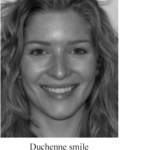
How to scientifically spot a genuine smile They're not the same, are they? The smiles you see when you meet your friends and family compared with what you see from salespeople trying to get you to buy something or management consultants pretending that the bad news they're giving you is actually good news. How can we tell that someone really means it when they're smiling? There are physical differences between types of smiles. 19th Century French neurologist, Guillaume Duchenne, spotted that there are two sets of muscles that are used for smiling. Unsurprisingly, one set of muscles moves the corners of your mouth. The other tightens the skin around your eyes. He noticed that only genuine smiles triggered the muscles around the eyes, leading a real smile to be named a Duchenne smile. Later research suggests that there are two pathways to triggering these sets of muscles. Those that are around the mouth can be set off voluntarily, while those around the eyes are triggered involuntarily and almost always by our emotions. A genuine smile has certain physical signs. Typically, if a smile is real, then people's cheeks are pulled up, the skin under their eyes bulges, and crow's feet can be seen at the corners of their eyes. Smiles that aren't genuine often disappear suddenly rather than fading gradually. These fake smiles are not caused by emotions, but they can get mixed with signs of the emotions that someone is genuinely feeling, like a wrinkled forehead caused by worry. Even ten-month-old-babies have shown that they can identify a real smile. It may be that we have evolved to spot genuine emotion. There's clearly a benefit in being able to identify who to trust, and who may be trying to deceive us. That's not to say that fake smiles are always a problem. They can help to smooth over difficult situations and maintain politeness. But there are times when it's good to know that a smile really means something. 词汇表 salespeople [ˈseɪlzˌpiːp(ə)l] n. 售货员,推销员(salesperson的复数) management consultant [kənˈsʌltənt] 管理顾问,经营顾问 neurologist [njʊəˈrɒlədʒɪst] n. 神经学家,神经科医生 spot [spɒt] vt. 发现,认出,注意到 two sets of muscles [ˈmʌs(ə)lz] 两组肌肉 genuine [ˈdʒenjuɪn] adj. 真诚的,真实的,真心的 trigger [ˈtrɪɡə(r)] vt. 触发,引起,牵动 Duchenne smile [djuːˈʃen] 迪谢纳微笑(真心微笑,涉及眼周肌肉的牵动) pathway [ˈpɑːθweɪ] n. (神经)通路,路径 voluntarily [ˈvɒləntrəli] adv. 自发地,有意识地 involuntarily [ɪnˈvɒləntrəli] adv. 不由自主地,无意识地 cheek [tʃiːk] n. 脸颊,面颊 pull up 使上扬,拉起,提起 bulge [bʌldʒ] vi. 鼓起,凸出,膨胀 crow's feet [ˈkrəʊz fiːt] n. 鱼尾纹(眼角的皱纹) wrinkled [ˈrɪŋk(ə)ld] adj. 有皱纹的,起皱的 forehead [ˈfɔːhed] n. 额头,前额 evolve [ɪˈvɒlv] vi. 进化,演变,逐步发展 deceive [dɪˈsiːv] vt. 欺骗,蒙骗 smooth over 缓和,调解,平息(矛盾或情绪) 📖 翻译、pdf见公众号【琐简英语】,回复"1"可进【打卡交流群】

2分钟
4k+
4个月前
The School of Life|为什么我们该停止寻找完美伴侣?

The School of Life|为什么我们该停止寻找完美伴侣?

英音听力|BBC & 经济学人等

Why we should stop looking for 'the right one' Partly thanks to new technology, we've become obsessed by the idea of finding an amazing character called, "The Right Person"! Back in the olden days, you made do; you just got together with because their land was next to yours, and your plow perfectly complemented their oxen; it was all pretty practical. But now, we're romantics with laptops out to find the ideal fit: someone who's beautiful, who totally understands us. Unfortunately, it's pretty hard. So many people aren't quite right, but still we keep going; they must be out there. That's what the stories have told us since childhood. But perfection is, at best, for angels only. A perfect seeming partner might appear compatible in so many ways, but still we might come to blows over the color of the curtains, tea versus coffee, or children's names. The real challenge of relationships isn't to find the perfect match, it's to negotiate the differences without panic or nastiness, and stop blowing up perfectly good relationships for mistaken dreams and flawless scenarios. Learning to give up on perfection may be just about the most romantic move any of us could make. 词汇表 be obsessed by [əbˈsest] 痴迷于,沉迷于 make do 将就,凑合着过 plow [plaʊ] n. 犁;vt. 犁地,耕 complement [ˈkɒmplɪment] vt. 与…相配,补充,使完善 oxen [ˈɒksən] n. 牛(ox的复数) romantic [rəʊˈmæntɪk] n. 浪漫的人,浪漫主义者 laptop [ˈlæptɒp] n. 笔记本电脑,手提电脑 ideal fit 理想匹配,完美契合 compatible [kəmˈpætəbl] adj. 合得来的,能共处的,兼容的 come to blows over 因…而打起来,因…争吵 perfect match 完美匹配,天作之合 nastiness [ˈnɑːstinəs] n. 恶毒,不友好,令人不快 blow up 摧毁,炸毁 flawless [ˈflɔːləs] adj. 无瑕的,完美的 🏫翻译,视频和pdf见公众号【琐简英语】,回复"1"可进入【打卡交流群】

1分钟
3k+
4个月前
BBC六分钟英语|为什么跳舞能让你的大脑更健康?

BBC六分钟英语|为什么跳舞能让你的大脑更健康?

英音听力|BBC & 经济学人等

Dancing for the brain Neil Hello. This is 6 Minute English from BBC Learning English. I'm Neil. Beth And I'm Beth. Neil Do you love to boogie on down, strut your stuff and throw shapes, Beth? What I mean is: do you like dancing? Beth Yes! I love to dance, just listening to the music and letting it move my body. What about you, Neil, do you often hit the dance floor? Neil Sometimes, but I'm not a great dancer. To be honest, I get a bit embarrassed. But maybe I shouldn't, because it's been proved that dancing has many physical and mental health benefits, including releasing stress, boosting your mood, or just enjoying a fun night out. Beth In this programme, we'll be hearing how dancing can benefit our brains and emotions at every stage of life. And, as usual, we'll be learning some useful new vocabulary as well. Neil Of course, another great thing about dance is that there are so many different styles, from ballet and ballroom dancing to tap, hip hop and jazz. But my question is about a very unusual style, a traditional English folk dance where performers wearing black hats and colourful waistcoats hit sticks together while moving in patterns. But do you know the name of this unusual dance, Beth? Is it: a) The Highland fling? b) Flamenco? or, c) Morris dancing? Beth I think the answer is Morris dancing. Neil OK, we'll find out later in the programme. Besides Beth, someone else who loves to dance is Julia Ravey, presenter of BBC Radio programme, Mental Muscle. Here, Julia tells us exactly why she loves dancing so much: Julia Ravey I love nothing more than a night or a day out where I can just dance like no one's business. To me, it's just such a release and it's something that I definitely rely on to get the stress out of my body. And I now absolutely love to move. Any chance I get, I'll dance. Now, I know everyone is not a fan, 'cause some people can find dancing to be awkward or uncomfortable… and I've seen people who just avoid the dance floor at all costs, but dancing is so good for us and potentially our brains. Beth Julia can dance like nobody's business, an idiom meaning very well, or very quickly. For her, dancing is a release, a way of freeing emotions, feelings or tension from her body. Neil Not everyone is the same as Julia though, and if, like me, the thought of dancing makes you uncomfortable, you might avoid the dance floor at all costs, no matter what happens. Beth That's a pity, Neil, because the benefits of dancing are huge – just ask Dr Peter Lovatt, also known as, Dr Dance. Over four decades, he's studied how dancing helps improve brain function in everyone from children and adults to older people living with diseases like Parkinson's and Alzheimer's. Dr Lovatt's dance therapy involves spontaneous movements, closing your eyes and letting the music move you. It promotes divergent thinking leading to happier, more creative brains. Neil So how can we get more people dancing? That's exactly what Julia Ravey asked Dr Lovatt for BBC Radio programme, Mental Muscle: Julia Ravey What would you say to the person listening who maybe doesn't dance at all right now, maybe would like to dance a bit more, maybe for them they're still a little bit on the fence about whether they want to dance? How can everyone get a little bit more movement into their daily life? Dr Lovatt OK, so the very first thing to do, I would suggest, is to lay on your bed with your eyes closed, and to find a piece of music that you like… close your eyes and then just hear the beat and feel the rhythm, so think about where in your body do you feel a twitch? Neil Julia mentions people who are sitting on the fence, who still haven't decided if they will do something or not, in this case, dance. Dr Lovatt's advice is simple – get comfortable, close your eyes and listen to some music. Soon, you'll feel a twitch, a small sudden and involuntary movement somewhere in your body. From there, it's only a few steps to dancing! Beth It seems a dance a day keeps the doctor away! So what do you reckon, Neil, are you ready to give it a go. Neil Hmm, maybe after I've revealed the answer to my question. Beth Right. You asked for the name of the traditional English folk dance where dancers wear colourful waistcoats and hit sticks, and I guessed it was Morris dancing… Neil Well, that was… the correct answer, Beth! Morris dancing is the name of the unusual English folk dance, not flamenco which of course is Spanish, or the Highland fling which comes from Scotland. OK, let's recap the vocabulary we've learned starting with boogie, strut your stuff, throw shapes and hit the dance floor, all modern idioms meaning to dance. Beth If you do something like nobody's business, you do it very well, or very quickly. Neil A release is the act of freeing emotions, feelings or tension from the body. 📝字数限制,完整文本、词汇表、翻译及pdf见公众号【琐简英语】,回复1可加入【打卡交流群】

5分钟
4k+
4个月前

加入我们的 Discord

与播客爱好者一起交流

立即加入

扫描微信二维码

添加微信好友,获取更多播客资讯

微信二维码

播放列表

自动播放下一个

播放列表还是空的

去找些喜欢的节目添加进来吧